You’ve written the ad, picked the offer, and decided when the campaign will go live. Now where should the link send people? Your homepage might be the easiest option, but it asks visitors to find the offer that brought them there. A dedicated landing page can live on your existing website and put the campaign front and center. It gives visitors the details they need to decide and a clear way to take the next step.
BPE gained interest by launching a dedicated landing page for their new upcoming battery product.
Give the page one job
Start with what you want someone to do after they click. That might be registering for an event, requesting a quote, or claiming a discount. Once you’ve picked the action, it’s easier to decide what belongs on the page.
Say you’re running a weekend sale. The headline should tell people what’s on offer. The copy can explain what’s included, when the sale ends, and how to claim the discount. If shoppers apply a code at checkout, put it somewhere they can find it before they start shopping.
Your main website still has a broader job. It helps people browse your products, learn about your business, and find your contact details. The campaign page gives people who came for the sale a direct way to shop it.
Although Hawaii Businesses has a main website for their articles, they also leverage Event RSVP landing pages to drive ticket sales.
Keep the details that help people decide
A focused page can still answer questions. If you’re asking someone to register for a workshop, they’ll probably want to know what they’ll learn, who it’s for, how much it costs, and when it takes place. Leaving out the price might make the page shorter, but it also gives people a reason to pause.
Take the same approach with forms. If you’re offering a free guide and only need an email address to send it, asking for a phone number and company name makes the download feel like more work than it needs to be.
Look at each link and button with the campaign in mind. A link to parking details can help someone decide whether to attend. A row of unrelated offers gives them another decision to make before they’ve signed up.
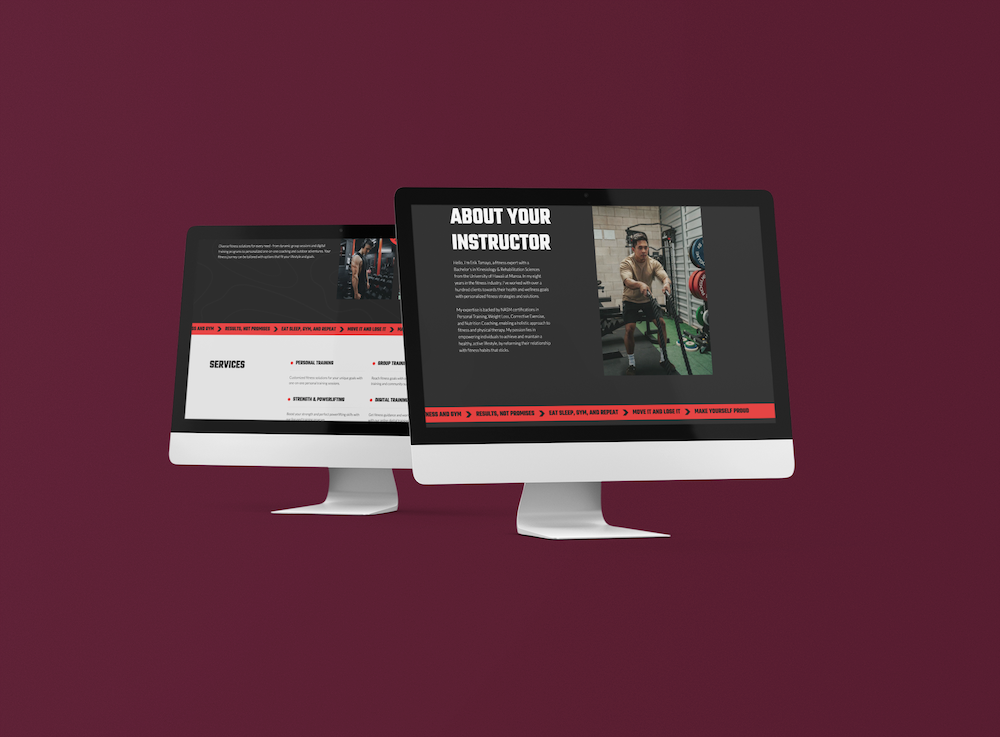
I utilize landing pages to drive sales to specific services I want highlighted. These landing page supplements the full website experience.
Build the page around the campaign
A dedicated page can make a time-sensitive promotion easier to put together. If you’re opening registration for a workshop next month, you can update the date, tickets, and signup details in one place. If you run the workshop again, you may be able to reuse the layout and update the details for the next session.
You can also adjust the message based on who’s arriving. People who click an ad for a workshop they’ve never heard of may need to see what it covers and who’s teaching it. Past attendees coming from your email list may care more about what’s new this time. Both groups can register for the same event, even if they have different reasons to sign up.
Various ways to market your landing page
Carry the ad’s offer through to the page
If your ad offers 20% off a first order, put that offer near the top of the landing page. Use the same terms and explain how to claim it. If the ad mentions a discount and the page leads with a different promotion, visitors have to figure out whether the original offer still applies.
It also helps to look at what people do after they click. For an event campaign, ad clicks tell you how many people followed the link. Completed registrations tell you how many took the action you wanted.
If people are clicking but few are signing up, look for places where they might get stuck. Can they find the date and price on a phone? Does the registration form ask for information you could collect later? Those are specific things you can check before spending more on the ad.
When is a landing page worth it?
Think about your next campaign and the page you’re planning to link to. Can someone find the offer, get their questions answered, and take the next step from that page? If it already does those things well, you can use it.
A dedicated landing page makes sense when the campaign needs its own message, details, or signup process. If you’re planning a promotion or event and need a page for it, get in touch.
Lorem ipsum dolor sit amet consectetur adipiscing elit lobortis arcu enim praesent cursuse viverra sit semper lorem eu cursus vel hendrerit elementum morbi adipiscing ultrices
Neque sodales ut etiam sit amet nisl purus non tellus orci ac auctor
Adipiscing elit ut aliquam purus sit amet viverra suspendisse potenti
Sitamet justo donec enim diam porttitor lacus luctus accumsan tortor
Mauris commodo quis imperdiet massa tincidunt nunc pulvinar
Working with this tool can improve your design speed considerably
Vitae congue eu consequat ac felis placerat vestibulum lectus mauris ultrices cursus sit amet dictum sit amet justo donec enim diam porttitor lacus luctus accumsan tortor posuere praesent tristique magna sit amet purus gravida quis blandit turpis.
Adipiscing elit ut aliquam purus sit amet viverra suspendisse potenti
Key features of this tool that improve your process
At risus viverra adipiscing at in tellus integer feugiat nisl pretium fusce id velit ut tortor sagittis orci a scelerisque purus semper eget at lectus urna duis convallis. porta nibh venenatis cras sed felis eget neque laoreet suspendisse interdum consectetur libero:
Neque sodales ut etiam sit amet nisl purus non tellus orci ac auctor dolor
Adipiscing elit ut aliquam purus sit amet viverra suspendisse potenti consectur
Mauris commodo quis imperdiet massa tincidunt nunc pulvinar
Adipiscing elit ut aliquam purus sit amet viverra suspendisse potenti dolor sit
“Lorem ipsum dolor sit amet, consectetur adipiscing elit, sed do eiusmod tempor incididunt ut labore et dolore magna aliqua. Ut enim ad minim veniam”
Wrapping up: This is the best tool for design in 2023
Eget lorem dolor sed viverra ipsum nunc aliquet bibendum felis donec et pellentesque diam volutpat commodo sed egestas aliquam sem fringilla ut morbi tincidunt augue interdum velit euismod eu tincidunt tortor aliquam nulla
Is this tool free to use for everyone?
Nisi quis eleifend quam adipiscing vitae aliquet bibendum enim facilisis gravida neque. Velit euismod in pellentesque massa placerat volutpat lacus laoreet non curabitur gravida odio aenean sed adipiscing diam donec adipiscing tristique risus